Background and Early Life
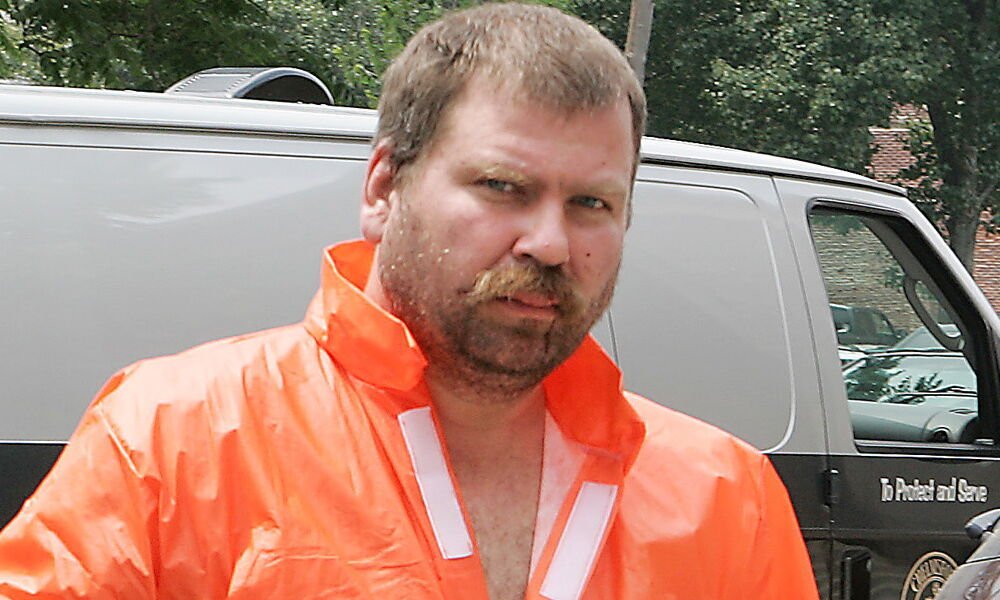
Adam Leroy Lane was born on August 7, 1964, in Jonesville, North Carolina. He later became known as a long-haul truck driver, a profession that gave him mobility, anonymity, and access to many highway corridors. Before trucking, he worked at a chicken processing plant. That ordinary labor history makes his later conduct more unnerving. Nothing in his early public profile suggested the severity of the violence he would later unleash.
Lane lived much of his adult life within the practical rhythms of freight transport. He moved across state lines with regularity, and his work placed him near rest stops, suburban roads, and isolated neighborhoods. Those conditions created opportunity. They also complicated later efforts to connect separate assaults into a single criminal pattern. His case demonstrates how transient occupations can mask predatory intent.
The 2007 Attack Sequence
In July 2007, Lane committed four attacks over an 18 day span. The crimes occurred in Pennsylvania, New Jersey, and Massachusetts. He carried two large hunting knives, choke wire, and a leather mask. The collection of tools suggested planning rather than impulse. He also kept a DVD of the horror film Hunting Humans in his cab, which reinforced the macabre atmosphere around the case.
The first known attack occurred on July 13, 2007, in West Hanover Township, Pennsylvania. Darlene Ewalt, age 42, was killed in a stabbing attack. Four days later, on July 17, 2007, Patricia Brooks was attacked in Conewago Township, Pennsylvania. She survived. On July 29, 2007, Monica Massaro, age 38, was killed in Bloomsbury, New Jersey. The final attack came on July 30, 2007, in Chelmsford, Massachusetts, where 15 year old Shea McDonough was confronted. He survived after subduing the attacker.
The sequence matters because it shows escalation and geographic spread. Lane did not remain in one jurisdiction. He moved through three states with terrible speed. That movement made the case more complex for investigators. It also intensified the eventual legal consequences, because each state pursued its own prosecution.
Chronology of Attacks
| Date | Victim | Age | Location | Outcome |
|---|---|---|---|---|
| July 13, 2007 | Darlene Ewalt | 42 | West Hanover Township, PA | Fatal stabbing |
| July 17, 2007 | Patricia Brooks | Unknown | Conewago Township, PA | Survived attack |
| July 29, 2007 | Monica Massaro | 38 | Bloomsbury, NJ | Fatal stabbing |
| July 30, 2007 | Shea McDonough | 15 | Chelmsford, MA | Subdued attacker |
This chronology reveals the compact brutality of the spree. The attacks were separated by only days. The victims were diverse in age and circumstance. Two died, and two survived. That balance is important because it shows both lethality and contingency. The final attack was not simply another assault. It became the event that ended the series.
Arrest and Physical Evidence
Lane was captured on July 30, 2007, after Shea McDonough’s parents overpowered him at their home. That intervention prevented further harm and secured the scene. Police then recovered the hunting knives. Investigators later matched Ewalt’s DNA to one blade. That forensic link tied Lane to at least one of the fatal attacks with strong evidentiary force.
The arrest also exposed the practical vulnerability of his criminal method. Lane relied on closeness, speed, and surprise. Once a victim resisted effectively, his advantage narrowed. The Chelmsford confrontation ended his mobility and allowed law enforcement to connect the earlier offenses. In many serial cases, capture follows a pattern of friction between offender confidence and victim resistance. Here, that collision was decisive.
Legal Proceedings and Sentences
Lane faced prosecution in multiple states. Massachusetts sentenced him in 2008 to 25 to 30 years for assaulting Shea McDonough. New Jersey imposed a 50 year term in 2009 for the murder of Monica Massaro. Pennsylvania followed in 2010, where he pleaded guilty to avoid the death penalty. He received life without parole for Darlene Ewalt’s murder, plus additional time for the Brooks attack.
| State | Year | Result |
|---|---|---|
| Massachusetts | 2008 | 25 to 30 years |
| New Jersey | 2009 | 50 years |
| Pennsylvania | 2010 | Life without parole plus additional years |
These judgments created consecutive sentences. That structure matters because it ensured no practical release horizon. Lane serves his terms at the State Correctional Institution in Fayette County, Pennsylvania. The stacked penalties reflect the gravity of the crimes and the cross jurisdictional scope of the spree. Each state treated its own victimization seriously, rather than deferring to a single venue.
Public Attention and Media Coverage
Lane’s case later attracted repeated media attention. Programs such as Dateline NBC, 48 Hours, Nightmare Next Door, and How I Caught the Killer revisited the crimes. Documentary and podcast coverage expanded the story beyond the courtroom record. By 2024, interest rose again after new true crime programming returned to the case.
That visibility has a familiar effect in notorious criminal cases. It preserves public memory while sometimes flattening the specific realities of the victims. In Lane’s case, the media focus often emphasized the roadside menace of the crimes and the shock of the Chelmsford arrest. The case title itself, “Highway Killer,” condensed a broader factual record into a vivid label. Such labels are memorable, but they can also obscure the lived damage behind them.
Family and Personal Life
Lane married Miriam M. Benge in 1992 and divorced in 1993. He later married Regina Lane. He fathered three daughters. During his trucking career, he lived with his family in a trailer. His relatives have remained largely outside the public eye. That privacy is unsurprising given the notoriety attached to his name.
Family history in violent offender cases often receives excessive speculation. In this instance, the available facts are spare. What can be said plainly is that Lane maintained a domestic life alongside his work life. That contrast makes the public record feel more dissonant. A person can inhabit ordinary roles while harboring dangerous compulsion. The case is a stark reminder of that contradiction.
Latest Developments
In August 2024, Apple TV+ released How I Caught the Killer: The Highway Hunter. The program renewed attention on Lane’s crimes and the investigation that followed. True crime outlets also returned to the case during 2024. Despite that renewed interest, no new legal motions or parole hearings have emerged.
The absence of fresh court activity is notable. Lane remains under the weight of consecutive sentences, including life without parole in Pennsylvania. Public attention may cycle, but the judicial outcome is fixed. That stability contrasts with the volatility of the original crime period in July 2007.
Key Takeaways
Adam Leroy Lane was a long-haul truck driver whose mobility helped conceal a brief but violent interstate crime spree. Between July 13 and July 30, 2007, he attacked four victims across Pennsylvania, New Jersey, and Massachusetts. Two victims died, and two survived. His final assault ended when Shea McDonough and his parents overpowered him. Physical evidence and later prosecutions tied him to the attacks with substantial certainty.
Lane’s case stands out for its compressed timeline, multiple jurisdictions, and severe sentencing outcome. Massachusetts, New Jersey, and Pennsylvania each imposed punishment, resulting in consecutive terms that remove any realistic prospect of release. The record also shows how quickly an offender’s pattern can be interrupted when victims resist and forensic evidence is secured.