A Child Pulled from War
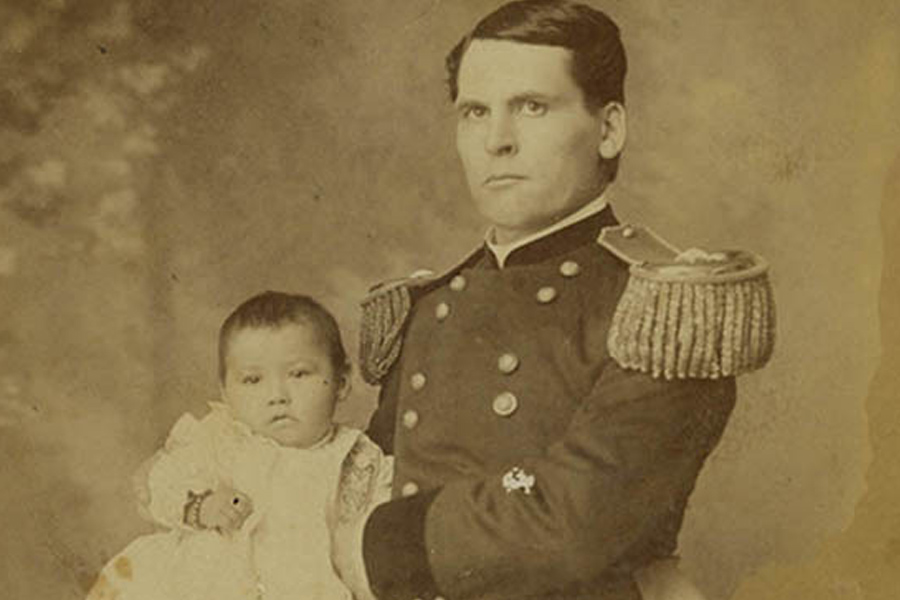
Lyncoya Jackson was a Creek child whose life began in calamity and ended before adulthood. He was found after the attack on Tallushatchee on November 3, 1813. The scene was brutal, unsettled, and exacting. His mother had already died, and the child was left amid ruin. Andrew Jackson’s men removed him from that aftermath and carried him into another world. That world was the Hermitage near Nashville, Tennessee.
The record around him is thin, yet the outline is forceful. He became part of Jackson’s household as a ward, not as a formal adoptee. That distinction matters. It shows how intimacy and hierarchy could coexist in one domestic arrangement. Lyncoya was sheltered, but he was also inserted into a political and racial order. His life moved through that order with limited freedom.
The Hermitage Household
The Hermitage was not a simple family home. It was a layered estate with blood kin, servants, enslaved people, visitors, and dependents. Rachel Donelson Jackson managed much of that domestic sphere. Andrew Jackson stood at its center as husband, patron, and commander. Lyncoya lived within that structure, but never outside its stratified logic.
He appears in accounts as a child who shared the household with Andrew Jackson Jr. Their relationship was often described through companionship. Yet companionship does not erase asymmetry. One child moved through privilege and inheritance. The other entered the home after battlefield loss and carried an unnamed past. That contrast shaped the tone of Lyncoya’s short existence.
His placement also shifted over time. At moments he seems to have lived close to the family. At other times he was housed separately, even among enslaved laborers. Such movement reveals the unstable position he occupied. He belonged to no ordinary category. He was treated with care, but under conditions that were never fully equal or secure.
Cultural Collision and Private Claim
Lyncoya’s story sits at the crossing of Native dispossession and southern household power. He was a Creek child taken from a war zone. The war itself was part of a broader campaign of conquest and pressure. His removal from the battlefield became an act of rescue in one frame and an act of appropriation in another. Both readings remain true at once.
That tension makes his life unusually instructive. Andrew Jackson’s guardianship was personal, but also ideological. It suggested benevolence while resting on military domination. Rachel Jackson’s domestic role may have softened the household’s immediate edges. Even so, the structure beneath it was unequal. Lyncoya lived inside that contradiction every day.
The name Lyncoya itself became part of the household memory. It marked him as distinct, memorable, and separate from the Jackson family line. Such naming could confer recognition. It could also freeze a child into a symbolic role. In his case, the name has outlived almost everything else. That survival is revealing, because the body of the historical record is otherwise meager.
Work and Apprenticeship
As Lyncoya grew older, plans were discussed for his future. Some accounts suggest schooling or military training were considered. Those plans did not take hold. Instead, he was apprenticed as a saddler in Nashville. This placed him in an occupation tied to horses, harnesses, leatherwork, and movement.
Saddlery was practical work. It required patience, manual precision, and steady repetition. It also connected him to the world of travel and cavalry. For a young man in early 19th century Tennessee, that trade offered a usable skill. Yet it was also a narrowing. Formal education gave way to labor. Ambition gave way to utility.
The apprenticeship shows how his life was being shaped by adult decisions. He was not free to choose his own trajectory. He was allocated a craft. He was trained to serve a specific social economy. Even in this apparently constructive arrangement, his agency remained modest. The world around him decided what his future could be.
Illness and Early Death
Lyncoya’s life ended in 1828. He was roughly 15 or 16 years old. The cause was pulmonary disease, described in the period as consumption. In modern terms, that almost certainly points to tuberculosis. It was a common and devastating illness in the 19th century.
His death closed a life already marked by rupture. First came the violence of war. Then came dislocation into a powerful household. Then came labor, frailty, and death. No personal estate survived to give his name material continuity. No substantial writings remain to let his own voice stand plainly. The documentary silence is severe.
That silence matters as much as the few facts that persist. It means Lyncoya is known through fragments, not through self-description. He appears in other people’s records and memories. That kind of preservation is partial and uneven. It grants existence, but not fullness.
Household Roles and Relationships
| Person | Relation to Lyncoya | Function in the story |
|---|---|---|
| Andrew Jackson | Guardian and patron | Took him into the household after Tallushatchee |
| Rachel Donelson Jackson | Household matron | Managed domestic life around him |
| Andrew Jackson Jr. | Foster companion | Shared childhood space and proximity |
| John Coffee | Military associate | Connected to the rescue after the battle |
| Mary Donelson Caffrey | Occasional caretaker | Helped with his placement at times |
| Biological parents | Deceased | Killed in the attack at Tallushatchee |
These relationships do not form a stable kinship tree. They form a practical network of care, command, and dependency. The same house could contain affection and coercion. The same adults who offered shelter also controlled movement, labor, and expectation. Lyncoya’s place inside that network was real, yet fragile.
Why His Story Persists
Lyncoya is remembered because his life compresses several large histories into one brief arc. There is the Creek War, with its lethal pressure on Native communities. There is the Jackson household, with its domestic discipline and public ambition. There is apprenticeship, which promised usefulness while limiting horizons. There is also disease, which cut him down before maturity.
His story attracts attention because it is intimate. It is not the story of a general campaign alone. It is the story of one child whose fate crossed the path of national power. That crossing gives the record a peculiar force. It shows how private care can be entangled with public violence. It also shows how a person can be remembered through the institutions that constrained him.
Lyncoya’s name has become a small but durable emblem. It stands for vulnerability, relocation, and the uncertain kindness of powerful households. It also stands for the historical erasure of Native children whose lives were shaped by conquest. The facts are spare, but their implications are not. A child found in 1813 can still disturb the present in 2025.
Key Takeaways
Lyncoya Jackson was a Creek child found after Tallushatchee on November 3, 1813. He was brought to the Hermitage and raised as an informal ward in Andrew Jackson’s household. His life moved through domestic care, unequal status, and apprenticeship as a saddler in Nashville. He died in 1828 at about 15 or 16 years old from pulmonary disease. No personal estate, substantial writings, or full self-record survives. His brief life remains significant because it exposes the collision of war, household power, and Native erasure.